How Did the Romans Think About Romantic Love?
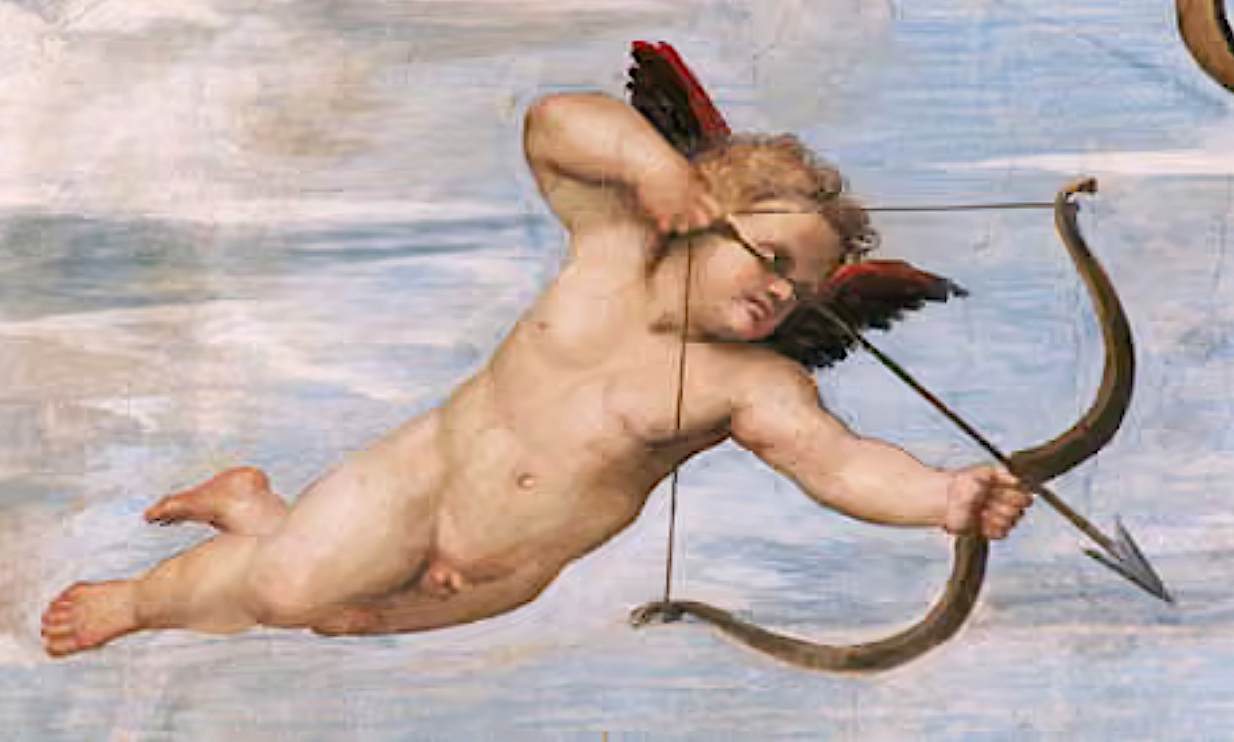
The word romance derives from the Latin romanicus, meaning in the Roman style. But what we think of as romance and what the ancient Romans thought of it are two very different things. The Romans were not sentimental, and in their hyper-masculine world becoming infatuated with a lover was seen as a kind of madness, an affliction that threatened to undermine a man’s virility and make him prey to those who were weaker than him.
To wrap your mind around this paranoid view of romance you must first grasp how the Romans looked at sex. It was all about male dominance as exemplified by the act of penetration. Men were in charge because they were the only ones who had the physical ability to penetrate others with their bodies. This gift from the gods, as they saw it, made them the natural born aggressors, and all those who might be penetrated by them their subordinates. This was the natural order of things, and anything that subverted it was considered weird, perverse, and a little unhinged.
Thus, to become infatuated with a lover was to surrender your power, to give up your dominance, and to the Roman mind this was madness. That’s why Cupid, the Roman god of desire, shoots an arrow that makes men lose their minds, and the state of infatuation that results is not considered pleasure, but torture. Roman love poetry speaks of agony, not bliss. To be in love was a trial, not transcendence. To a Roman, the idea of marrying someone because you loved them would’ve been like marrying someone because they drove you crazy. Marriage was reserved for more pragmatic purposes.
Romans married for economic, political, and social reasons, to combine the incomes of two families or associate their family with a higher status social class or to bring together two families for business reasons. Infatuation and passion were the province of mistresses and concubines, but even there, a Roman male had to be careful. Sex with prostitutes was fine, and quite common, but to fall in love with one would have been unthinkable. Similarly, becoming smitten with a slave would have been shameful, not because of the degradation suffered by the slave, but because doing so would have meant ceding power to the weakest of individuals.
The taking of a mistress was a dicey business. Ideally you would want someone equal or above you in the social order. This was a mistress you could be proud of. With her you could flaunt your affair without fear of judgement, and Roman men did so with impunity. A cuckolded husband was nothing to worry about. If a man’s wife was cheating on him with a lover of a similar social class, it was understandable. After all, he was probably doing the same thing. The only time there was trouble was when the power dynamic was out of balance. When that happened, something was definitely wrong with the lovestruck man. He had lost his mind. He had been struck by Cupid’s arrow.
Given the vast gulf that separates our understanding of romantic love from the Romans’, you might wonder how the word romance came to be associated with the Romans. Well, it didn’t happen during the Roman era. It happened after the Fall of the Roman Empire when the Franks, Goths, and other tribes who took over Roman Gaul needed a way to refer to the former inhabitants of the area. They called them Romanus and referred to their language as romantic. In the Middle Ages when tales of chivalric heroism became popular, tales that often involved rescuing damsels in distress and falling in love with them, they were written down in the language most literate people could read at the time. That’s right, the romantic language of the region’s former inhabitants. Thus, the stories became known as romances.
But the association had everything to do with the concept of chivalric love and almost nothing to do with how the Romans thought of infatuation and passion. To the Romans, falling in love was a sickness of the mind put there by a mischievous cherub with a bow and arrow.
As the Roman poet Catullus said: “I hate and I love. Why I do this, I do not know. But I feel it happening and I am in torment."