How Realistic is the Movie "Gladiator"?
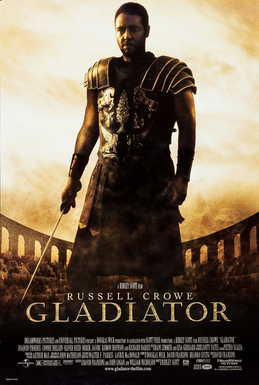
The laughable Tik Tok myth that most men think about Rome every day no doubt had its roots in Ridley Scott’s film Gladiator (2002). Gladiator was a huge hit and got people talking about the Roman Empire again after decades when it had fallen off the radar of popular conversation. The film itself is well acted, brimming with action, and filled with all sorts of interesting details, from the set design to the costumes. But how realistic is it, really?
Taking Liberties with the Facts
I must admit I was pleasantly surprised when I saw Gladiator for the first time. I was expecting a rehash of the silly swords and sandals epics of the 1950’s and 60’s, like The Fall of the Roman Empire and Ben-Hur. For Gladiator the writers clearly did their homework. They got the succession of Emperor’s Marcus Aurelius and his son Commodus right, depicting the former as a wise and stoic philosopher, beloved by his people, who led his armies in battle, while the latter was a self-absorbed ass, prone to all sorts of capricious behavior.
Yet right from the start the writers took liberties with the facts. The battle depicted at the outset, the Battle of Vindobona, never happened. However, the battle was a stand-in for a series of battles that did occur during the Macromannic Wars (166 – 180 AD), and Marcus Aurelius did die in Vindobona (modern day Vienna), although not at the hands of his son Commodus, but rather of a disease.
Commodus, Lucilla, and Maximus
Commodus succeeded to the throne and was a jarring contrast to his father. He was loud, pompous, and lazy. His depiction by Joaquin Phoenix strikes me as accurate, albeit with the understanding that much of what was subsequently written about Commodus came from members of the Senatorial class, who despised him. But for all the disparaging biographical details written about him by historians, the film’s writers make him look worse.
Commodus is depicted as forcing an incestuous relationship on his sister, Lucilla. This did not happen and is clearly an attempt by the writers to associated him with Caligula, that most despicable of Roman Emperors. The truth is that Lucilla deplored her brother’s unstable rule and conspired to have him killed. The plot was discovered, Lucilla was exiled, then murdered.
During Commodus's rule, Lucilla was a widow. She had three children by her late husband, the youngest of which was Lucius Verus. So, Lucius Verus did exist. However, he died when he was a child, and he was most certainly not the illegitimate son of a dashing gladiator named Maximus.
The character of Maximus is pure fiction. While it may have been true that Marcus Aurelius saw potential trouble when he considered his son Commodus as emperor, it is not true he decided to make someone else emperor in his stead. Maximus was not hunted down by Commodus in a jealous rage, and Maximus’s family was not killed. Maximus did not exist.
The Gladiatorial Battles
The depiction of the gladiatorial school in the film is accurate. Many gladiators were enslaved prisoners of war, but not all. Some enrolled in gladiator schools as way to climb out of poverty, and a few enrolled for the glory of it.
The gladiatorial battles in the film are accurate, up to a point. Men in armor did fight each other, and sometimes to the death, but most gladiatorial combats were overseen by a referee, and the combatant who was getting the worst of it could “tap out” by raising a finger. If the referee stopped the fight at the request of a gladiator, an appeal could be made to the crowd, the famous thumbs up or thumbs down, which today we understand as death or life for the combatant, but in fact the crowd’s response could be interpreted by the fight manager as he saw fit. Roman spectators were not as bloodthirsty as they have been portrayed, and a clear majority in favor of death for the combatant was rare, allowing the fight manager to reinterpret the crowd's response as he saw fit. Because gladiator's were expensive to train and outfit and represented a significant investment to the owner's, lives were spared whenever possible.
It's true that Commodus liked to play at being a gladiator and even entered the arena, but he took care not to get hurt and preferred shooting arrows at the combatants from the safety of his box. He never entered a fight he hadn’t rigged in his favor.
I was grateful to the filmmakers for avoiding the temptation to show Christians being thrown to the lions. While it’s true that some Christians were thrown to the lions during the persecutions of the third and fourth centuries, it was the exception, rather than the rule, and the punishment was not reserved for Christians alone, but was employed against any criminals. In any case, it was not common.
The use of wild animals in the arena, however, is accurate. Lions, tigers, bears, and elephants were routinely deployed for the entertainment of the people, sometimes as foils for the gladiators, but more often in Venatio, wild beast hunts, where well-armed hunters would stalk the animals around the arena and try to kill them. More often than not, the animals were the victims, not the people.
The Perfect Villain
The climax of the movie where Maximus overpowers Commodus in the arena and stabs him is entirely fictional. Commodus was not killed in the arena but was strangled to death in his bed by his wrestling partner after a foiled attempt to poison him by his mistress Marcia. After his assassination, Commodus was proclaimed damnatio memoriae, damned in memory, by his enemies in the Senate. His statues were pulled down and his name was removed from inscriptions and documents. Needless to say, he was not well liked. Which makes him the perfect villain for a twenty-first century movie about the Roman Empire.
Historical Fiction Versus Historical Fantasy: A Troubling Trend
All in all, I was impressed by the accuracy of Gladiator. Yes, it was highly fictionalized, but a filmmaker must tell a compelling story, and as long as he stays within the guardrails of recorded history, and isn’t distorting things to make a political point, I have no problem with it.
The same cannot be said about Gladiator II, which was a crushing disappointment and is an example of what happens when a filmmaker gives in to his worst impulses. But that’s an article for another day.
If you’ve seen the TV series Boardwalk Empire, you've seen another historically accurate portrayal of real people set within a fictional tale with all the rich historical details that help enrich the story. This is historical fiction well-conceived and executed, the kind I appreciate, and the kind that has been pushed to the margins by ridiculous historical fantasies like Bridgerton, Outlander, and Dickenson that distort the historical facts to fluff things up or make a political point, leaving us all dumber as a result.
I can only hope this is a mere fad and will soon give way to a greater appreciation for authenticity, but I may be disappointed. In a post truth world where facts are dismissed in favor of political or financial agendas, the truth will suffer, and history will be the victim.
