The Central Place of Spectator Sports in the Roman Empire
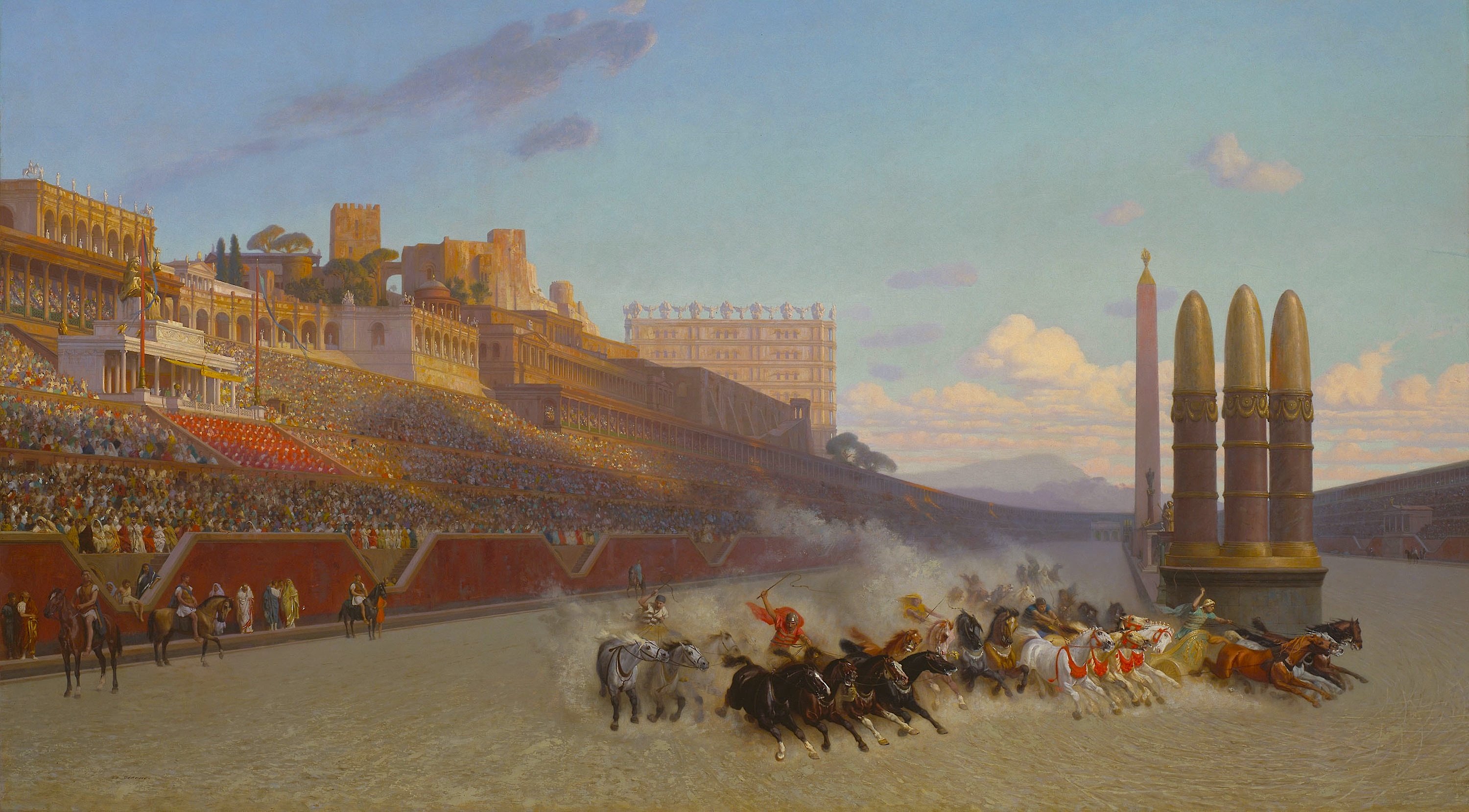
Ancient Rome was a society that loved sports. From boxing to chariot racing, and Gladiatorial battles to harpastum, an ancient form of rugby, the Roman public couldn’t get enough of sports. Spectator sports provided a sense of belonging, supported a shared ethos, and delivered a welcome diversion to the monotony of everyday life. Sports also gave the emperors a form of social control. Therefore, it is not surprising that the decline of spectator sports in Roman culture coincided with the decline of the Empire itself.
Entertainment for the People
The Romans inherited their love of sports from the Greeks whose affection for running, wrestling, and javelin throwing formed the basis of the ancient Olympic Games, which began in 776 BC and ran every four years until 393 AD, deep into the Roman era.
In a time before television, printed media, and other forms of entertainment, spectator sports held a central place in Roman society and carried with it a decidedly democratic spirit. In Rome, sports were for every man, not just the rich and well-to-do. In many ways they were the glue that held society together.
Theater and dance were alternative forms of cultural diversion, as was oratory and the reciting of poetry. But these pastimes required a degree of literacy on the part of the viewer and therefore tended to be highbrow and exclusive, whereas anyone could watch chariots careening madly around a track and enjoy it. In a time before capitalism, more thought was given to the positive societal influences of sports than to making a profit, and although money was involved, spectator sports were made available to the common man at little or no cost.
The Many Benefits of Spectator Sports
Spectator sports built social cohesion and national identity. The Roman Empire was expansionist at its core. It kept expanding outward, conquering and absorbing subject people and assimilating them. As it expanded, it introduced spectator sports to the newly absorbed communities. That’s why today you can see the ruins of Roman hippodromes and amphitheaters from Spain to Romania, and from France to Syria. Sports brought communities together and made them feel a part of the larger Empire.
Moreover, sports were a proxy for war. In unstable areas of the Empire where uprisings threatened, sports channeled negative emotions into competitive rivalries, defusing tensions and averting unrest.
Sports provided heroes to emulate. In areas where restive locals might be looking for a firebrand to lead them in opposition to the government, celebrities in the sports arena gave them less risky champions to look up to, weakening their appetite for resistance.
Sports were a method by which emperors could curry public favor. When an emperor found himself the target of public disapproval, it was not uncommon for him to call for public games to demonstrate his generosity and provide a much needed distraction.
The Decline and Fall of Sports in the Roman Empire
As long as the Empire prospered and expanded, spectator sports were a key part of Roman society, but as the Empire began to falter and contract, spectator sports became less and less approved of. Putting on public games was expensive, and it became harder to justify the cost of producing them. Wagering, which was always an exciting part of the experience, became increasingly regarded as frivolous, a diversion of funds away from more worthy investments. And one institution in particular disparaged the waste.
The Christian Church relied on contributions from its patrons and parishioners. As its wealth grew, so did its appetite for money. By the 5th century the Christian church was a very wealthy institution, richer in some cases than the emperors themselves. An emperor who proposed wasting money on public games was severely frowned upon by Papal authorities, and in due course the games themselves came to be seen as a threat to the Church’s prosperity.
Boxing was the first to go. Derided as a brutal sport, boxing was outlawed in 393 AD and driven underground, where it flourished for a few years as an illicit pastime until the Church ultimately succeeded in stamping it out. It did not emerge again until the 17th century.
Gladiatorial combat was next. In 404 AD the Christian emperor Honorius called a halt to the sport and closed down the gladiatorial schools. No doubt many people were displeased, but this was at a time when Christianity was the sexiest new trend in Roman society, and everyone wanted to be a part of it. The Church stepped in with ever more lavish masses featuring gold and silver accoutrements, silk robes, and glittering jewels to dazzle and thrill, but conspicuous displays of wealth didn’t offer the same opportunities for social bonding as did spectator sports.
The End of Spectator Sports in Western Europe
Chariot racing hung on until 549 AD. It was not a bloodsport like boxing or gladiatorial fighting, so the Church could not attack it on moral grounds, but that didn’t mean the Church didn’t view it as competition for the enthusiasm and devotion of the people and want it gone. In 532 AD the Church got its opportunity.
The Nika Riots were a fight between chariot racing factions in Constantinople that channeled political dissatisfaction into an epic street brawl over sports rivalries. It ended in the deaths of tens of thousands of people. The Church condemned the riots and chariot racing along with them. The last chariot race in the West was held seventy-three years after the fall of the Roman Empire in 549 AD.
Thus, the disappearance of spectator sports coincided closely with the Fall of the Western Roman Empire, and those pastimes that had provided so many people with excitement and camaraderie were abolished in favor of a somber, brooding religiosity that was a reflection of the autocratic nature of medieval society.
Interestingly, only when the Renaissance brought about a revival of interest in democratic principles did spectator sports begin to flourish again. But for a thousand years, with few exceptions, spectator sports were relegated to the trash heap, another tragic casualty of the Fall of the Roman Empire.
